



Canacem-logo-header

CEMENTO

El cemento mexicano es un producto reconocido por cumplir con los estándares internacionales de producción y calidad

ATRIBUTOS DEL CEMENTO

 El cemento que se ocupa en construcción es un polvo fino, obtenido de la calcinación a una temperatura que puede llegar a alcanzar los 1,450 grados centígrados de una mezcla compuesta por piedra caliza, arcilla y mineral de hierro.

El producto del proceso de calcinación se denomina clínker, que, al ser triturado con yeso, adiciones y aditivos químicos, resulta en cemento apto para la construcción.

What Casizoid Reveals About Online Casino Regulations in Canada

Canada’s online gambling landscape has long been a subject of debate among regulators, operators, and players alike. The country operates under a decentralized regulatory model, where individual provinces hold the authority to license and oversee gambling activities within their borders. This fragmented approach has created a complex ecosystem that continues to evolve rapidly. Casizoid, an online casino platform that has entered the Canadian market, offers a revealing lens through which to examine how offshore operators navigate, respond to, and sometimes challenge the existing regulatory framework. Understanding what Casizoid’s presence tells us about Canadian online casino regulation requires a closer look at the legal structure, enforcement realities, and the broader competitive environment shaping the industry today.

The Regulatory Framework Governing Online Casinos in Canada

Canada’s approach to gambling regulation is rooted in the Criminal Code of Canada, which was last substantially amended in relation to gambling in 1985. Under this framework, the federal government granted provinces the exclusive right to conduct and manage gambling within their jurisdictions. This means that provinces such as Ontario, British Columbia, Quebec, and Alberta have each developed their own regulatory bodies and licensing systems. The result is a patchwork of rules that can differ significantly from one province to the next, creating both opportunities and complications for operators seeking to serve Canadian players.

Ontario represents the most significant regulatory development in recent Canadian gambling history. In April 2022, the province launched its iGaming Ontario framework, which allows private operators to apply for licenses and legally offer their services to Ontario residents. The Alcohol and Gaming Commission of Ontario (AGCO) oversees this process, requiring operators to meet strict standards related to responsible gambling, financial transparency, anti-money laundering compliance, and fair gaming practices. This move marked a dramatic shift from the previous model, where only the provincially operated OLG (Ontario Lottery and Gaming Corporation) could legally offer online casino services to Ontario residents.

Outside Ontario, the regulatory picture remains considerably murkier. Most other provinces have not yet established comparable private licensing frameworks, meaning that players in provinces like Alberta, Manitoba, or Nova Scotia technically reside in jurisdictions where only government-operated platforms are legally sanctioned. Despite this, offshore and internationally licensed casinos have continued to serve Canadian players for decades, operating in a legal grey zone that authorities have generally tolerated rather than actively prosecuted. This tolerance has shaped the competitive environment in which platforms like Casizoid operate and has influenced how Canadian consumers understand their rights and protections as online gamblers.

The federal government’s 2021 amendment to the Criminal Code, known as Bill C-218, further complicated the landscape by legalizing single-event sports betting across Canada. While this change primarily affected sports wagering, it signaled a broader political willingness to modernize gambling laws and acknowledge the realities of a digital gambling economy. The amendment opened the door for provinces to expand their regulated offerings, and several have moved quickly to do so. However, the pace of regulatory change remains uneven, and the gap between what is legally available through regulated channels and what players actually seek from international platforms continues to drive demand for operators like Casizoid.

What Casizoid’s Market Position Reveals About Regulatory Gaps

Casizoid’s presence in the Canadian market is itself an indicator of where the regulatory framework falls short of meeting player demand. The platform, which holds licensing from international jurisdictions, offers a breadth of casino games, promotional structures, and payment options that many provincially operated platforms have historically struggled to match. When players compare the user experience offered by government-sanctioned platforms with that of internationally licensed operators, the differences in game variety, bonus offerings, and interface quality have often been stark. This disparity has historically driven Canadian players toward offshore options, and Casizoid’s market positioning reflects a deliberate strategy to capitalize on this gap.

One of the most telling aspects of Casizoid’s operation is its payment infrastructure. The platform supports a range of payment methods that align with what Canadian consumers actually use, including major credit cards, e-wallets, and increasingly, cryptocurrency options. The willingness to accommodate diverse payment preferences speaks to a sophisticated understanding of the Canadian market that some regulated domestic platforms have been slower to develop. This agility is possible partly because internationally licensed operators are not bound by the same procurement processes and regulatory constraints that govern provincially operated entities, allowing them to adopt new technologies and payment systems more rapidly.

The competitive pressure exerted by platforms like Casizoid has not gone unnoticed by regulators. In Ontario, the iGaming framework was explicitly designed in part to bring players back to regulated environments by making licensed private operators more competitive. Players searching for the best online casinos in canada now have access to a growing list of provincially licensed operators that must meet rigorous standards for game fairness, responsible gambling tools, and player fund protection, offering a level of consumer security that offshore platforms may not consistently guarantee. This shift represents a meaningful maturation of the Canadian regulatory approach, acknowledging that prohibition without competitive alternatives simply pushes players toward unregulated options.

Casizoid’s bonus and promotional structures also reveal something important about regulatory philosophy. Ontario’s AGCO has imposed restrictions on certain types of gambling advertising and promotional offers, particularly those that might appeal to vulnerable populations or encourage excessive play. These restrictions, while well-intentioned, create a situation where regulated operators face marketing constraints that their unregulated offshore competitors do not. Casizoid, operating under a different licensing regime, can offer promotional structures that may appear more attractive to players unfamiliar with the consumer protection rationale behind Ontario’s restrictions. This asymmetry is a genuine challenge for regulators seeking to create a level playing field while also protecting consumers.

Enforcement Realities and the Challenge of Jurisdictional Complexity

One of the most revealing aspects of Casizoid’s continued operation in Canada is what it demonstrates about the practical limits of enforcement. Canadian authorities have historically focused their enforcement efforts on operators who establish a physical presence within Canada without authorization, rather than pursuing offshore platforms that serve Canadian players remotely. This enforcement posture reflects both the legal complexity of pursuing foreign entities and a pragmatic acknowledgment that blocking access to offshore platforms is technically difficult and politically contentious in a society that values internet freedom.

The jurisdictional complexity of online gambling enforcement is considerable. When a Canadian player accesses a platform licensed in, for example, Malta, Curaçao, or Gibraltar, the applicable law depends heavily on where the operator is incorporated, where its servers are located, and how Canadian courts interpret the relevant provisions of the Criminal Code. Legal scholars have long debated whether accessing an offshore gambling site constitutes a violation of Canadian law by the player, with the prevailing interpretation being that individual players are not the target of enforcement action. This creates a de facto environment of permissiveness that operators like Casizoid can reasonably rely upon when making market entry decisions.

Provincial governments have responded to this enforcement challenge in different ways. British Columbia’s BCLC has operated an online gambling platform since 2004 and has lobbied for stronger tools to restrict access to unlicensed competitors, including payment blocking mechanisms. Quebec attempted to implement a DNS blocking regime targeting unlicensed gambling sites, but this initiative was struck down by the courts on constitutional grounds related to freedom of expression. These failed attempts at restriction have reinforced the practical reality that Canadian regulators must compete for players rather than simply exclude alternatives. Casizoid’s ability to operate in this environment without facing meaningful legal obstacles is a direct consequence of these enforcement limitations.

The anti-money laundering dimension of online gambling regulation also deserves attention in this context. Canadian financial intelligence regulations require reporting entities, including casinos, to implement robust know-your-customer (KYC) and transaction monitoring procedures. Provincially licensed operators are clearly subject to these requirements, but the application of Canadian AML rules to offshore platforms serving Canadian players is less straightforward. Casizoid, like other internationally licensed operators, implements KYC procedures required by its licensing jurisdiction, but whether these procedures meet the standards that Canadian regulators would impose is a matter of ongoing regulatory concern. This gap represents one of the most significant consumer protection risks associated with the current regulatory environment.

The Future of Online Casino Regulation in Canada: Lessons from Casizoid’s Presence

The trajectory of Canadian online casino regulation suggests a gradual but meaningful movement toward more comprehensive provincial licensing frameworks. Ontario’s experience with iGaming Ontario has been closely watched by other provinces, and early indicators suggest that the model is generating significant tax revenue while bringing a substantial portion of previously unregulated activity into a supervised environment. Alberta has been studying the Ontario model, and British Columbia has indicated interest in expanding its regulatory approach to accommodate private operators. If these provinces follow Ontario’s lead, the market share available to offshore operators like Casizoid may diminish as regulated alternatives become more competitive.

However, the pace of regulatory expansion across provinces will depend on political will, administrative capacity, and the ability of regulated platforms to genuinely compete on the dimensions that matter most to players. Game variety, user experience, payment flexibility, and promotional attractiveness are all areas where regulated operators must continue to improve if they are to recapture players currently served by international platforms. The presence of Casizoid in the Canadian market serves as a constant reminder to regulators of what players are seeking and what the regulated environment must offer to be genuinely competitive.

Responsible gambling considerations will also shape the regulatory landscape going forward. Canada has seen growing public and political attention to problem gambling, and regulators are increasingly focused on ensuring that both licensed and unlicensed operators implement effective harm minimization tools. Ontario’s regulations require licensed operators to implement self-exclusion programs, deposit limits, and reality check features. The extent to which offshore platforms like Casizoid implement comparable tools voluntarily, or under pressure from their own licensing authorities, will be an important factor in how Canadian regulators assess the risk posed by their continued operation in the market.

International regulatory cooperation may ultimately prove necessary to address the challenges that platforms like Casizoid highlight. Canada’s gambling regulators have increasingly engaged with counterparts in Europe, Australia, and other jurisdictions to share best practices and develop coordinated approaches to cross-border enforcement. As the global online gambling market continues to consolidate around a smaller number of major licensing jurisdictions, the standards set by bodies like the Malta Gaming Authority and the UK Gambling Commission will have increasing influence on the behavior of operators serving Canadian players, regardless of whether those operators hold Canadian licenses.

Conclusion

Casizoid’s presence and operation in Canada encapsulates the broader tensions inherent in the country’s decentralized, evolving approach to online casino regulation. The platform reveals where regulatory gaps persist, where enforcement limitations constrain provincial authority, and where the competitive dynamics of the global online gambling market challenge domestically focused regulatory models. As provinces like Ontario continue to refine their licensing frameworks and others consider following suit, the lessons offered by examining operators like Casizoid become increasingly valuable. Effective regulation must balance consumer protection with competitive viability, and Canada’s ongoing regulatory evolution suggests that policymakers are beginning to understand that achieving this balance requires engaging with market realities rather than simply attempting to suppress them.

CANACEM-Cemento-Icono-Small

1

El cemento es uno de los materiales prioritarios en la construcción por su resistencia, flexibilidad y versatilidad.

CANACEM-Revolvedora-Icono-Small

2

El cemento puede producir estructuras con una larga vida útil, que resisten cambios extremos climáticos y ataques químicos.

CANACEM-Cemento-Icon-Small

3

Por su compatibilidad con materiales de construcción convencionales, se pueden lograr diferentes texturas o contrastes.

PROCESOS DE PRODUCCIÓN

Primera Etapa

Extracción y trituración

La primer etapa del proceso de producción de cemento inicia con la selección de las materias primas. Estas incluyen caliza, marga, arcilla, pizarra, etc.

A partir de estas materias se obtienen los siguientes compuestos minerales: carbonato cálcico (CaCO3), óxido de silicio (SiO2), óxido de aluminio (Al2O3) y óxido de fierro (Fe2SO3).

Segunda Etapa

Cocción y Clinker

Cocción del crudo en hornos rotatorios hasta alcanzar una temperatura del material cercana a los 1400°C, para ser enfriado bruscamente y obtener un producto intermedio denominado clínker.

Tercera Etapa

Molienda del clinker y envasado
Molienda del clínker con otros componentes: yeso (regulador del fraguado) y adiciones (escorias de alto horno, cenizas volantes, caliza, puzolanas, etc.), para dar lugar a los distintos tipos de cemento.

¿Cómo se hace el cemento?

Reproducir video

INNOVACIÓN

Canacem-contruccion-en-cemento

Se han introducido en la industria políticas innovadoras que van desde la responsabilidad social, y mejoras en los productos finales, hasta procesos tan complejos como el uso de energías alternas. Estas políticas han sido ejemplo para otras industrias y han merecido reconocimientos nacionales e internacionales.

Existen diferentes tipos de cemento que pueden ser utilizados para construcciones determinadas, los hay desde el tradicional cemento de albañilería hasta el cemento que se usa para edificaciones que se encuentran bajo el agua.

Si quieres conocer más acerca de los tipos de cemento que se producen en México, visita el sitio del Instituto Mexicano del Cemento y el Concreto (IMCYC) la institución nacional mas reconocida en cuanto a evaluación de calidad y procesos de producción del cemento.

Canacem-Cemento-Renovacion

HISTORIA DEL CEMENTO EN MÉXICO

HISTORIA DEL CEMENTO
EN MÉXICO

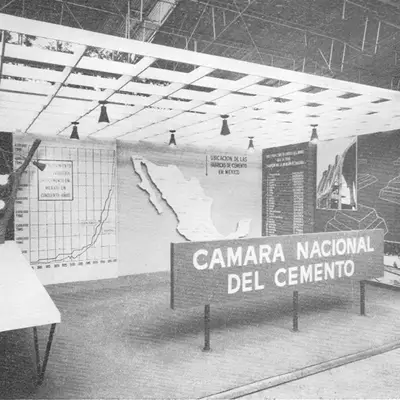
Nuestra historia comienza en 1881 en el Estado de Hidalgo, donde se había fomentado la inversión de capitalistas ingleses, el empresario inglés Henry Gibbon alquila una fracción de la vieja Hacienda de Jasso e instala una fábrica de cal hidráulica. Posteriormente se asocia con otro inglés, Joseph Watson, y comienzan a producir cemento por primera vez en el país.

CERTIFICACIONES Y RECONOCIMIENTOS

Reconocimientos y certificaciones de la industria cementera mexicana

El cemento producido en México por las empresas cementeras, es un producto reconocido mundialmente que cumple con los estándares internacionales de producción y calidad.

Conoce algunos de los reconocimientos que han recibido nuestras empresas afiliadas por su labor en la conservación del medio ambiente, la sustentabilidad económica y social.

  • Certificado-de-Industria-Limpia

    Certificado de Industria Limpia

    Es una evaluación sistemática, documentada y objetiva de la efectividad de las acciones realizadas para cumplir con la legislación ambiental y lograr un desempeño superior al exigido por la misma. Debe ser independiente y capaz de identificar problemas presentes y futuros.

  • Excelencia-Ambiental

    Excelencia Ambiental

    Reconoce a las empresas que demuestren la mejora continua de su desempeño ambiental, un compromiso ejemplar con la preservación del ambiente y una manifiesta responsabilidad social con el entorno.

    Además, busca fomentar el liderazgo ambiental y promover la adopción de estándares de desempeño establecidos a nivel internacional así como la implementación de prácticas ambientales sustentables y de vanguardia.

  • Empresa-Socialmente-Responsable

    Empresa Socialmente Responsable

    Es un distintivo (no certificable) que otorga el Centro Mexicano para la Filantropía (Cemefi) a empresas y organizaciones mexicanas: Ética y gobernabilidad empresarial, calidad de vida en la empresa, vinculación y compromiso con la comunidad y su desarrollo y el cuidado y preservación del ambiente.

  • Premio-Ética-y-Valores-en-la-Industria

    Premio Ética y Valores en la Industria

    Reconoce públicamente el esfuerzo de Cámaras, Asociaciones y Empresas, que están aplicando de forma exitosa los principios de responsabilidad social corporativa en la operación de sus organizaciones.

La CANACEM no gestiona la fijación de precios ni la comercialización de cemento.

X